 100-night sleep trial
  100% satisfaction guarantee
  Free delivery and returns
  10-year warranty


Did you know your sleep rhythm and energy levels are influenced by your chronotype? Chronotypes are divided into four groups—bear, lion, wolf, and dolphin—each with a unique biological clock. Your chronotype determines not only your sleep schedule but also when you’re most energetic and productive throughout the day.
Curious to learn more about these sleep types? This article helps you discover your chronotype and explains how understanding it can improve your sleep and daily routine.
What is a chronotype?
In simple terms, a chronotype refers to your natural sleep-wake rhythm—your biological clock. While you may have heard terms like “night owl” or “early bird,” chronotypes go beyond morning or evening preferences. They dictate when you feel sleepy, when you’re most productive, and even the best times to eat and exercise.
Chronotypes are often categorized into four groups: bear, lion, wolf, and dolphin. Each has a distinct sleep pattern and energy level throughout the day. This classification became popular in 2016 when Dr. Michael Breus introduced these terms in his book, The Power of When, making chronotypes more accessible.
What determines your chronotype?
Several theories suggest what shapes our chronotype. A 2017 study revealed that genetics play a significant role in influencing it.
A study conducted in Singapore found that even toddlers exhibit morning or evening preferences. Interestingly, children with the wolf or dolphin chronotype were more likely to experience sleep challenges than those with a morning chronotype. This shows that chronotypes can impact us from a young age.
What is your chronotype?
Chronotype names are inspired by the natural behavior and rhythms of the animals they’re named after. Wolves are nocturnal, dolphins are light sleepers, and so on. Each chronotype has distinct characteristics that affect your sleep, energy levels, and productivity.
-
Bear
Bears are most active during the day and sleep at night, closely mirroring the typical human sleep-wake cycle. People with the bear chronotype thrive in a 9-to-5 schedule and usually have no trouble falling asleep. About 55% of the population falls into this category.
Tip: Schedule important tasks in the morning or early afternoon, when your productivity peaks. The ideal bedtime for bears is 11:00 PM.
-
Lion
Lions are natural morning people, often rising before sunrise and feeling most productive in the early hours of the day. Their energy tends to dip after lunch, and they usually prefer going to bed early. Approximately 15% of the population has the lion chronotype.
Tip: Tackle your most important tasks between 8:00 AM and 12:00 PM. Aim to go to bed before 10:00 PM for optimal rest.
-
Wolf
Wolves are true night owls. They feel most energetic and creative in the evening and nighttime but struggle with early mornings. Around 15% of people fit the wolf chronotype.
Tip: Schedule creative or demanding tasks for the late afternoon or evening. Try to go to bed by midnight to ensure sufficient sleep.
-
Dolphin
Dolphins are highly alert, even during sleep, with one half of their brain often staying active to detect potential threats. People with the dolphin chronotype frequently struggle with insomnia and light sleep, leaving them feeling fatigued during the day. Roughly 10% of the population belongs to this group.
Tip: Practice relaxation techniques like mindfulness or breathing exercises before bed to calm your mind. Stick to a consistent sleep schedule, even if your sleep remains light and fragmented.
Take the chronotype quiz
While most people fit into one primary chronotype, it’s possible to have traits from multiple types. Use our comparison chart below to identify your natural rhythm.
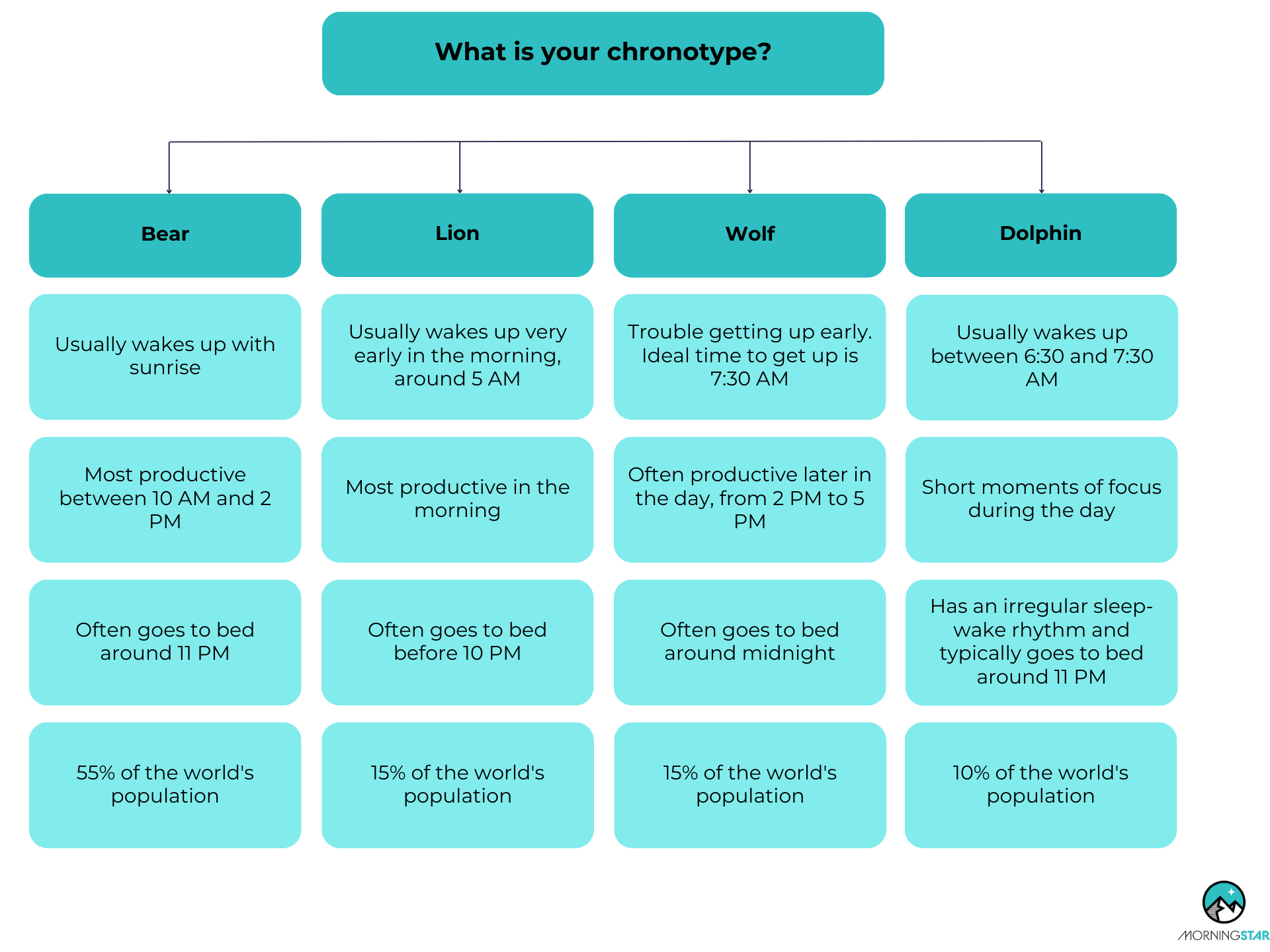
For a more detailed analysis, take the official quiz by Dr. Michael Breus, also known as the “Sleep Doctor.”
Why is knowing your chronotype important?
Understanding your chronotype allows you to align your daily routine and sleep patterns with your natural energy cycles. This can help you become more productive, sleep better, and even improve your mental well-being.
Although your chronotype is largely influenced by genetics, environmental factors such as exposure to daylight, work schedules, and screen time can disrupt your sleep rhythm. These disruptions may lead to issues like social jet lag, fatigue, and difficulty concentrating. Recognizing your chronotype helps you live in sync with your rhythm, benefiting your overall health.
At Morningstar Sleeps, we understand that everyone has a unique sleep pattern. That’s why we offer high-quality sleep products and personalized advice to help you get the most out of your chronotype. Whether you’re a bear, wolf, lion, or dolphin, we’re here to guide you toward better sleep. Contact our team today for expert advice.

