 100-night sleep trial
  100% satisfaction guarantee
  Free delivery and returns
  10-year warranty


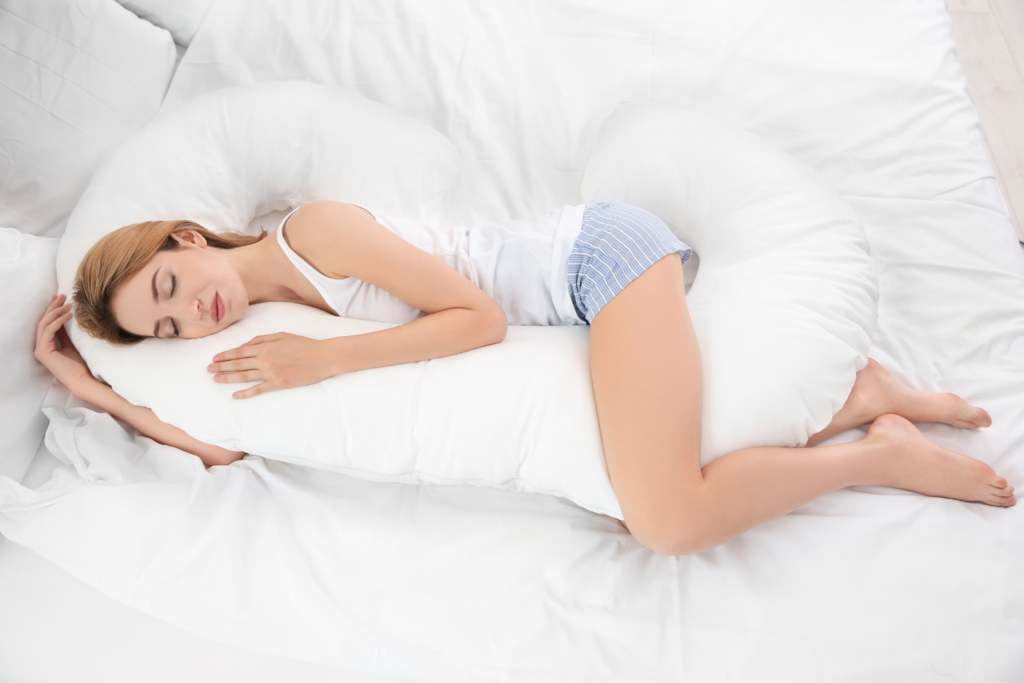

A comfortable looking bed is actually always aimed at people who sleep with a pillow. But do you sleep with pillows under your head just as well as if you slept without a pillow? Before a discussion of the caliber of chips or fries breaks out, we will help you out with this blog. Whether you can sleep better without or with a pillow mainly depends on your sleeping position. So both can be very nice for your night’s sleep.
-
Table of contents
- 1. Is it better to sleep with or without a pillow?
- 2. Advantages and disadvantages of sleeping with a pillow
- 3. Does sleeping without a pillow help with neck problems?
- 4. The right head support to suit your sleeping position
Is it better to sleep with or without a pillow?
We have no idea how you sleep now, but if you get up fresh and fruity and above all without pain, then keep it up. If you wake up in the morning with pain and it wasn’t there the night before, your pillow could be the culprit. Because in addition to a comfortable mattress, a good pillow is also important for a perfect night’s sleep. And if you like to do that on your stomach, you’re best off without a pillow. A good pillow is recommended for other sleeping positions.
Advantages and disadvantages of sleeping with a pillow
Did you know that it is dangerous to sleep without a pillow if you suffer from glaucoma? And that you can relieve heartburn with a pillow? Sleeping without a pillow mainly has disadvantages, such as the risk of all kinds of neck and head complaints. Only when you suffer from acne is it better to sleep without a pillow, so that your skin can breathe. In that case, we recommend that you sleep on a towel folded in half to the correct height, so that your neck and head are in line with your back.
Does sleeping without a pillow help with neck problems?
No, sleeping without a pillow does not help with neck complaints. What does help is sleeping on the right pillow. A good pillow, together with a good mattress, ensures that your spine is straight from your tailbone to your head. The thickness of your pillow depends on whether you sleep on your back or side most of the time. In addition, you have to take into account that a pillow will become obsolete after a number of years. How fast this is partly depends on the filling. You notice this when your pillow no longer provides the necessary support. In addition, a pillow is an ideal nest for dust mites, if only for that reason you should replace it regularly.
The right head support to suit your sleeping position
Stomach sleepers
Do you like to sleep in the most unhealthy sleeping position, on your stomach? As a stomach sleeper you are not only unlucky that this position forces your head and neck out of the straight line, but also that a nice soft pillow only makes things worse. It is best to learn to sleep on your side. Until then you can get through the night without a pillow, or a very thin one if necessary. A thin pillow under your pelvis can also reduce back problems in this position.
Back sleepers
Turn 180 degrees and sleep on your back? Back sleepers tilt their head back slightly without a pillow. With a pillow that is too thick, your chin will sink onto your chest. A thin pillow with possibly a thicker part at your neck is ideal for anyone who sleeps on their back. If you suffer from your lower back, a small pillow under your lower back or knees can help.
Side sleepers
Sleeping on your side is the best sleeping position for your body, but side sleepers should sleep with a pillow. Also in this position, a too thick pillow tilts your head upwards, resulting in neck complaints. An item that is too thin does not support your neck sufficiently, so that your neck muscles are overloaded. In addition, it reduces blood flow to your head which can make you dizzy. Back sleepers benefit from a firm pillow with a thickness equal to the distance from your neck to your shoulder.

