 100-night sleep trial
  100% satisfaction guarantee
  Free delivery and returns
  10-year warranty


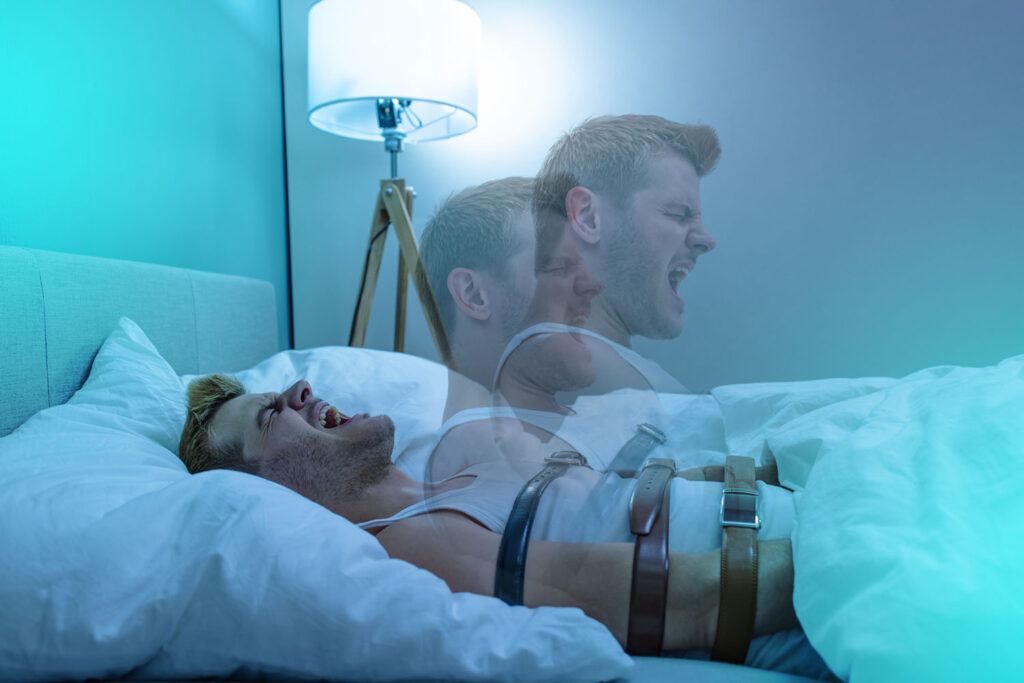

You wake up in the middle of the night. You hear sounds around you that you can’t quite place and breathing is difficult. Footsteps pound more and more in your direction and you hear your bedroom door open. You want to see what’s going on, but you can’t turn it around. You can’t move a muscle while hearing voices whisper softly in your ear. You scream for help, but no sound comes. Totally paralyzed, you can only wait for this nightmare to be over. Did you end up in a movie? No, this really happens, for minutes. And with you, tens of thousands of Dutch people still suffer from this pretty scary phenomenon. It’s called sleep paralysis and with some tips you can reduce the seizures.
-
Table of contents
- 1. What is Sleep Paralysis?
- 2. What Happens During Sleep Paralysis
- 3. These are the symptoms you feel
- 4. The explanation of your sleep paralysis
- 5. Tips to avoid the paralyzing feeling
What is Sleep Paralysis?
In a healthy state, you can do anything as soon as you wake up. Talk, move, react to danger, snooze or just get up and start your day. When this is not possible for a few seconds to minutes, we speak of sleep paralysis or sleep paralysis. How long the attack lasts and how often it happens is different for everyone.
What Happens During Sleep Paralysis
Your sleep cycle lasts about an hour and a half and it repeats several times a night. In your sleep you temporarily lose consciousness so that your body can relax and recover. The last half hour of the sleep cycle is the REM phase , a deep sleep where your eyes move quickly. You can usually wake up from this in a normal way. In sleep paralysis, the REM phase ends earlier, the brain is already awake, but the body is still asleep.
These are the symptoms you feel
When you are paralyzed in your sleep, breathing feels extremely difficult, when you want to take a deep breath to calm yourself down. This is accompanied by a feeling of pressure on your chest.
You can usually open your eyes, although not all patients succeed. It is precisely the ability to open your eyes that makes the inability to move and breathe frightening.
Some people with sleep paralysis suffer from hallucinations. It’s like you’re half asleep and half awake. This makes it seem as if there are others in your bedroom, sometimes with malicious intent.
Above all, fear is an important symptom, because you cannot move. Especially in combination with hallucinations, this fear can also occur during the day.
The explanation of your sleep paralysis
Sleep paralysis has to do with a disturbed REM phase. This can be due to long-term sleep deprivation, a sleep schedule that changes often, a lot of stress, sleeping on your back, narcolepsy, certain medication (for example for ADHD), or alcohol and drug abuse. A combination of the above can increase the frequency of paralysis.
Tips to avoid the paralyzing feeling
Good sleep is important, especially if you have a sleep disorder. Sufficient sleep in a good bed with a wonderfully comfortable mattress is essential. And that according to a tight schedule, so don’t adjust during the weekend. Not sleeping on your back and going to bed as relaxed as possible certainly helps. Be sober from alcohol and drugs, and discuss with your doctor whether there is anything you can do with your medication if you think it is because of this.
[faq_blok post=”2769″]

